







February 8, 2026

Rack Attack Team
If you have shopped for a roof rack in 2026, you’ve likely experienced "Sticker Shock."
You enter your vehicle information into a fit guide, select a premium system from Thule or Yakima, and watch the cart total climb past $800. For two aluminum bars and four plastic towers.
For decades, North American drivers felt they had only two choices: pay the "Big Two" premium or buy a dangerous, noisy knockoff from Amazon.
But in 2023, that changed. CRUZ—Spain’s largest roof rack manufacturer—officially entered the North American market, exclusively through Rack Attack.
You might look at the lower price tag and think, "Is this some cheap startup?" Absolutely not. Founded in 1963, CRUZ has been manufacturing racks longer than Yakima. They are a European heavyweight that just happened to be late to the American party.
We put their flagship Airo Dark system head-to-head against the industry giants to answer one question: Can you get Audi-level quality at a Volkswagen price?
1. The Heritage Check: Who is CRUZ?
Before you bolt anything to your roof, you need to know who built it.
- Thule: Founded in Sweden, 1942. The "Gold Standard" for premium racks.
- Yakima: Founded in Washington, 1979. The rugged "American Adventure" brand.
- CRUZ: Founded in Spain, 1963.
- The Scale: They operate a massive manufacturing facility in Córdoba, Spain, and sell in over 30 markets globally.
- The Certification: Unlike cheap Amazon brands, CRUZ is TÜV Certified and City Crash Tested. These are the strict European safety standards required to drive on the German Autobahn. They are legitimate safety equipment, not cosmetic accessories.
2. The Product Lineup: Fuse vs. Dark T
One area of confusion for new buyers is the naming convention. CRUZ offers two main "Aero" styles, both available in black (Dark) or silver.
Option A: The "Flush" Look (CRUZ Airo Fuse)
- The Design: The bars merge seamlessly into the low-profile feet, ending right at the roofline.
- The Comparison: This competes directly with the Thule WingBar Edge or Yakima FlushBar.
- Best For: Vehicles with raised side rails (like a Subaru Outback or Audi Q5) where you want a sleek, "factory-installed" look.
Option B: The "Through" Look (CRUZ Airo T)
- The Design: The bars extend past the feet, giving you extra width.
- The Comparison: This competes with the Thule WingBar Evo.
- Best For: Drivers who need maximum cargo space. That extra 4-5 inches of overhang allows you to mount a bike rack outside the tower, fitting more gear on the roof.

3. The "Silence" Test: Airfoil Technology
The #1 fear for roof rack buyers is Wind Noise. Cheap square bars howl like a banshee at 70 mph.
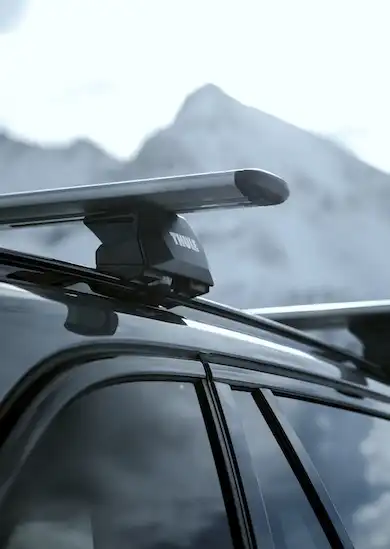
- The Tech: CRUZ Airo bars use a literal Airfoil Shape (wing profile) to slice through the wind. They sit low to the roof, minimizing drag.
- The Detail: Crucially, they include Rubber Filler Strips for the top T-track. If you leave a rack’s T-track open, it whistles. CRUZ includes these strips to close the gap and keep the ride silent.
- The Verdict: In our testing, the noise profile is indistinguishable from a Thule WingBar.
4. The "Compatibility" Test: Will My Gear Fit?
This is the most common question we get: "I already own a Thule bike rack. Will it fit?" YES.
- The Standard: The CRUZ Airo bars feature a Standard 20mm T-Track running along the top channel.
- The Fit: This is the exact same industry-standard dimension used by Thule, Yakima, Kuat, and Rhino-Rack.
- How it Works: You simply slide your bike rack or kayak carrier into the slot. If you use clamp-style mounts (like a cargo box claw), the CRUZ bar width (80mm) is standard, so the claws will wrap around it perfectly.
5. The "Wallet" Test: The Pricing Breakdown
Why is it cheaper?
- The "Big Two" Model: You buy three separate boxes: Bars ($250) + Towers ($300) + Fit Kit ($150) + Locks ($60). Total: ~$760+.
- The CRUZ Model: CRUZ simplifies the supply chain. They often bundle components (Bars + Feet) and manufacture everything in-house in Spain rather than outsourcing to various global suppliers.
- The Price: A typical CRUZ Airo Dark system (Bars + Feet + Kit) lands between $450 - $550.
- The Savings: You keep $200 - $300 in your pocket. That’s enough to buy the actual kayak carrier you needed the rack for.
The Trade-Offs: Where Thule Still Wins
To be a fair review, we must highlight where the extra money for Thule goes.
- Weight Capacity:
- CRUZ Airo: Rated for 75 kg (165 lbs).
- Thule WingBar Evo: Rated for 100 kg (220 lbs).
- Reality Check: Most vehicle roofs have a limit of 165 lbs anyway. Unless you are mounting a heavy 4-person Rooftop Tent, the Thule extra capacity is likely wasted on you.
- Fit Range: Thule has fit kits for everything, including 20-year-old sedans. CRUZ is focused on modern (last 10-15 years) popular vehicles.
The Rack Attack Verdict
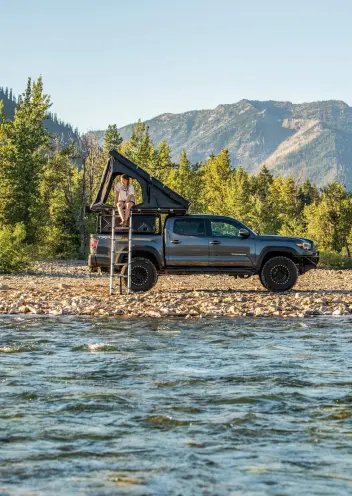
If you are building an "Overland Rig" with a 200lb Rooftop Tent and need absolute maximum heavy-duty ratings, stick with Thule or Yakima.
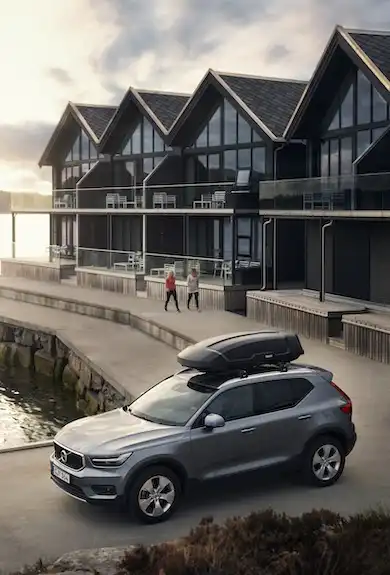
But for the other 95% of drivers—families carrying skis, cyclists carrying bikes, or road-trippers with a cargo box—CRUZ is the smarter buy.
You get a TÜV-Certified, Aerodynamic black aluminum system that looks identical to the premium brands, for hundreds of dollars less.


